YOUR PAST SELF
No. 01
When in your past did you feel most at peace? What were you doing, and who were you with?
one small step · Recreate one small element of it this week.
Today's Small Win
Thank your younger self, in one written line.
A lighter life, not a different one
Not just a Journal/Planner — A Deep Rooted Psychology practice for women to hear themselves again. Drawn one at a time, whenever you're ready. Not just passive writing, Structured to put feelings into words.
No Schedule · No Streaks · Nothing To Fall Behind On
If your last journal is in a drawer, this one won't do that to you. Pick up where you are — not where you should have been.
Instant PDF downloadNo subscriptionSimple refund policy
From The Vision Edit & Deeper Edits Cards
This isn't your first journal
Somewhere in your house, there's probably one already. You know the pattern: buy it, start strong, love it for six days, then life happens — and it goes in a drawer. That's not a willpower problem. It's a design problem, and it only ever goes one of two ways.
Daily goals. Thirty-day plans. Streaks to keep. Miss one day, and the app quietly tells you: your streak ended. What started as self-care becomes one more place you're falling behind.
A blank page and “write your thoughts.” No starting point, no direction — just you and a cursor. So the notebook stays empty, and eventually it stays closed.
A New Becoming sits between the two. Enough guidance that you never face a blank page. Enough freedom that there's nothing to fail at. No dates. No streaks. No catching up —
pick up where you are, not where you should have been.
The mechanism
Every card in this deck is built on one idea psychologists have studied since the 1980s: writing honestly about what's actually going on helps turn scattered thoughts into something that finally makes sense. Here's why it works, in plain terms.
A question does what a blank page can't.
“I don't know what to write” is where most journaling ends. A good question doesn't hand you an answer — it hands you a direction. You're never staring at nothing.
Handwriting is slower than your racing mind.
Typing keeps pace with rushing thoughts. A pen doesn't — and that lag is the point. It's harder to spiral on paper than in your head, because your hand can't move as fast as the loop.
Nothing to track means nothing to fail.
No streaks, no daily targets, no missed-day guilt. Just a question, when you're ready for it — so the practice survives the weeks a habit tracker never could.
“By question twelve I finally knew what I actually wanted.”
Not magic. Just a quieter way to think — one that used to happen naturally, before every spare minute had a phone in it.
Meet The Vision Edit
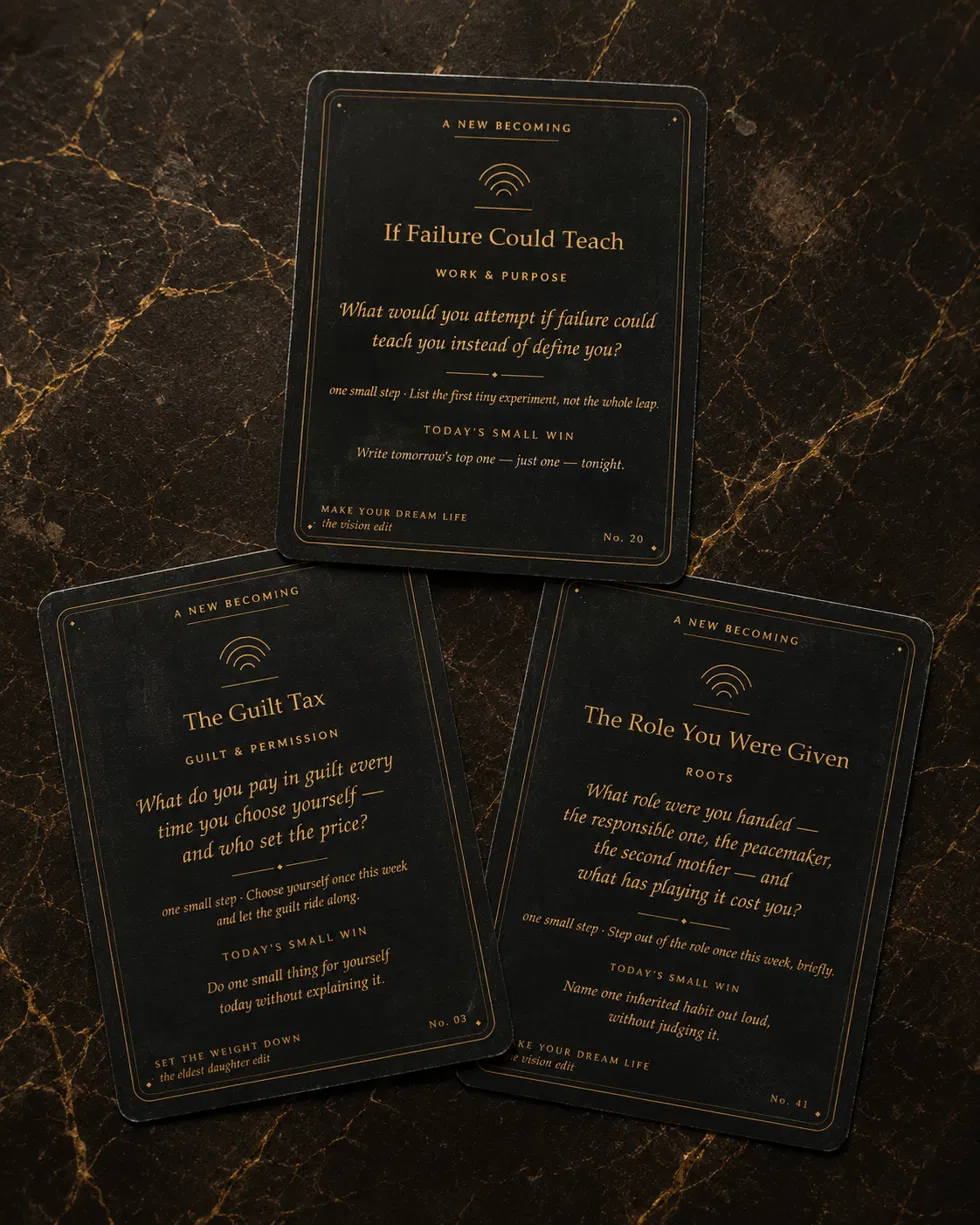
A question removes the blank page — here's what that actually looks like. Three real cards from the deck, exactly as they're printed.
YOUR PAST SELF
No. 01
When in your past did you feel most at peace? What were you doing, and who were you with?
one small step · Recreate one small element of it this week.
Today's Small Win
Thank your younger self, in one written line.
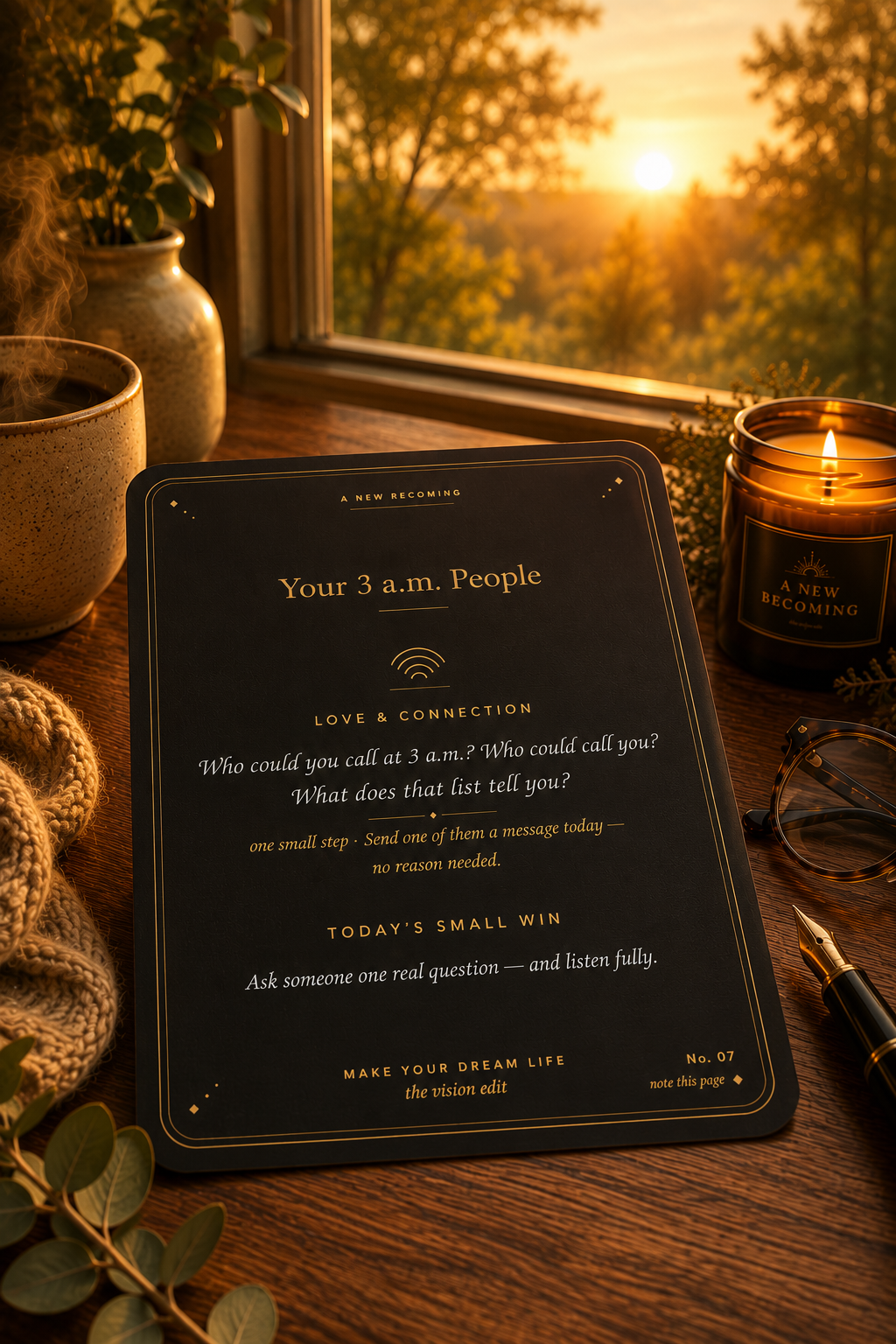
LOVE & CONNECTION
No. 07
Who could you call at 3 a.m.? Who could call you? What does that list tell you?
one small step · Send one of them a message today — no reason needed.
Today's Small Win
Ask someone one real question — and listen fully.
HEALTH & ENERGY
No. 72
What would rest look like if it didn't have to be earned?
one small step · Take ten unearned minutes of it today.
Today's Small Win
Book the appointment you've been postponing.
The anatomy of a card
Ninety prompts, across ten areas of a life — self, love, health, money, home, work, joy, and the seasons already lived through.
Every card carries the same four parts: a theme, one honest question, one small step, and one small win — so a hard question always ends with something doable.
Unnumbered and unordered. Draw one whenever you're ready, like a card — never a lesson plan.
No schedule, no streaks, nothing to fall behind on.
If any of this sounds familiar
Different roads, same weight. The structure is exactly why it works when the last journal didn't.
What actually changes
No one's promising a transformation here. Just this: the small, ordinary moments that quietly get easier.
Walking into the house without your brain immediately listing what needs doing.
Coffee that's still warm by the time you get to it.
Saying “I can't tonight” without rehearsing the apology first.
Reading a page without the guilt-voice asking what else you should be doing.
Going to bed without replaying everyone else's problems.
Someone asking how you're doing — and you actually having an answer.
“I haven't ‘restarted’ once — I've just returned.”
Nothing here is guaranteed. But these are the moments women tell us come back first.
Say “I can't tonight” without rehearsing an apology first. Boundaries stop feeling like confrontation and start feeling like a sentence.
Go to bed without mentally reviewing everyone else's problems. The loop gets quieter when the thoughts finally have somewhere to land.
A question removes the blank page. Most journals die at “write your thoughts.” Here the page starts the conversation, so you never have to invent where to begin.
Handwriting is slower than thinking. Typing keeps pace with a racing mind; a pen doesn't. That lag is the whole point — it turns reaction into reflection.
How a Becoming Works
Beginning again was never meant to be done from memory, alone, without a plan. It's meant to be walked — slowly, with something in hand, at whatever pace the season allows.
Borrowed From the Research
The prompt structure is modeled on reflective-writing practices psychologists have studied since the 1980s. We didn't invent the method — we built the books around it, closely and on purpose.
In Chronological Order
The questions move through time deliberately: the seasons already lived, the present as it actually is, and only then the becoming. A story makes more sense told in order.
Feelings, Put Into Words
Every practice comes back to one act: naming what's there, on paper, in plain language. The research tradition calls this putting feelings into words. The books just call it being honest.
Built on studied practices — never a claim about results. The footnote below the shop says the rest.
NAME IT
Ninety honest prompts and questions, moved through in order — what's already lived, then now, then what's next. Answered before any plan is made.
so you stop circling the same question in your head
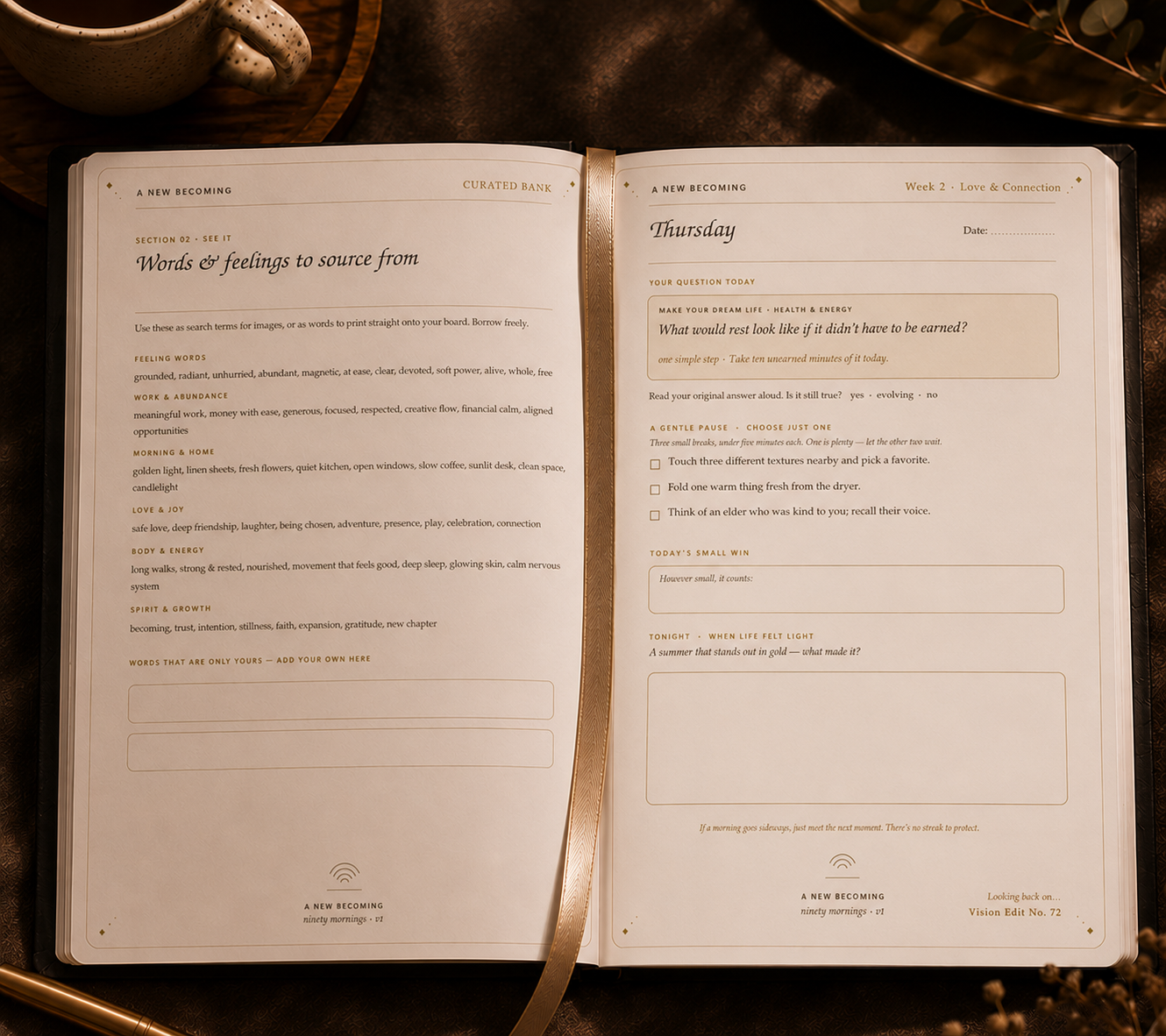
WALK IT
Reads your own answers back, one morning at a time, and turns each into a single small step. No schedule, no streaks — just open it when you're ready.
so tomorrow doesn't start from zero again
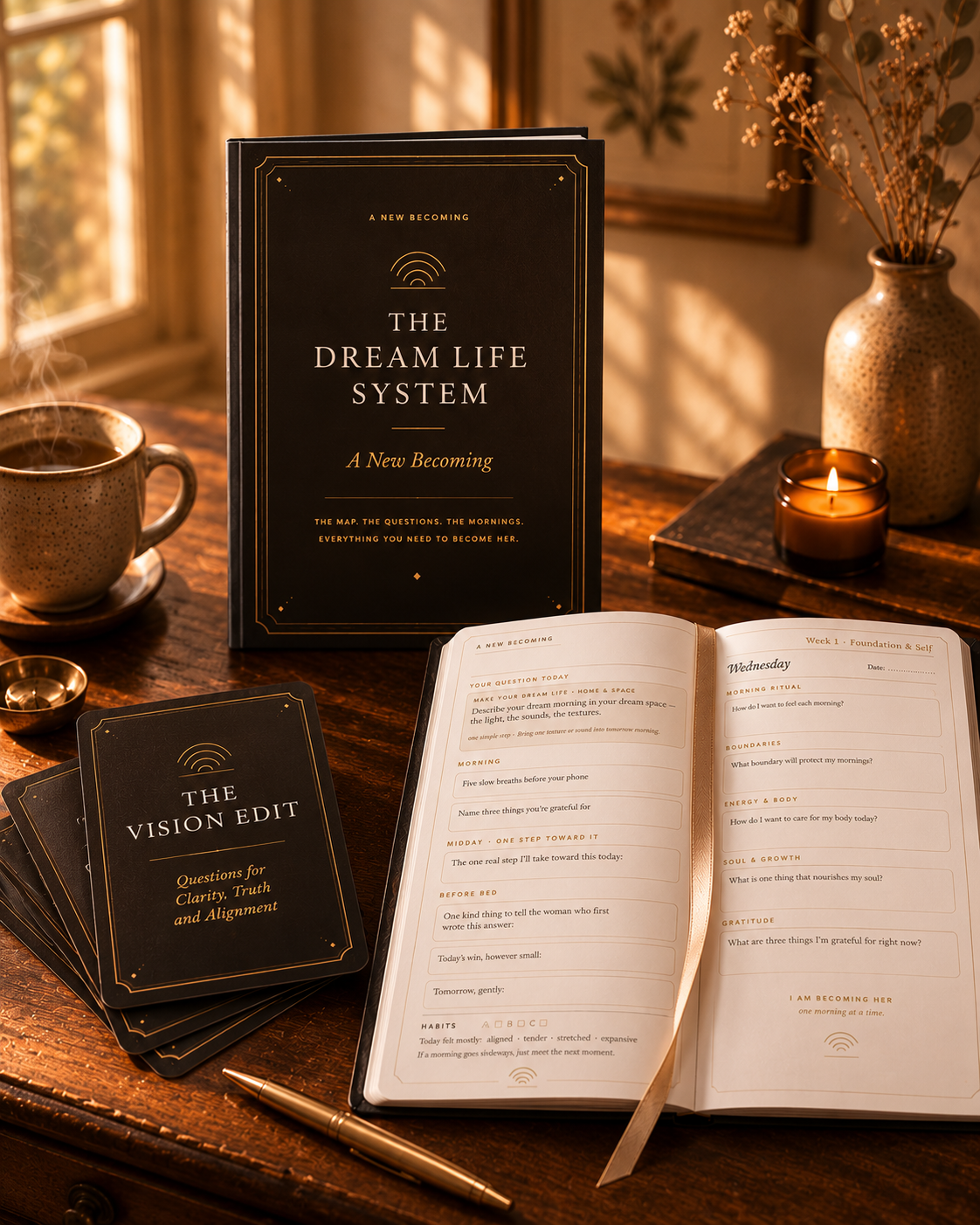
TAKE THE WHOLE PATH
Both books, plus the Inner Work Essentials for what sits beneath the wanting. Name it, walk it, and rewrite what runs underneath — together.
so the whole practice holds together, start to finish
Start anywhere. Return whenever. The books keep the place.
The Books
Book One of Two · An A New Becoming Guided Writing Tool
Name what a life is asking for — in your own words, before any plan begins.
“Finally have words for what you actually want — not what you're supposed to want.”
What's Inside
Book One is where the wanting gets named. Book Two — Ninety Mornings — is where it gets walked. Finish here first.
“You don't need to become someone new — you're coming home to who you already are.”
$23
Instant PDF downloadPrint-readyNo app, no login, no subscription
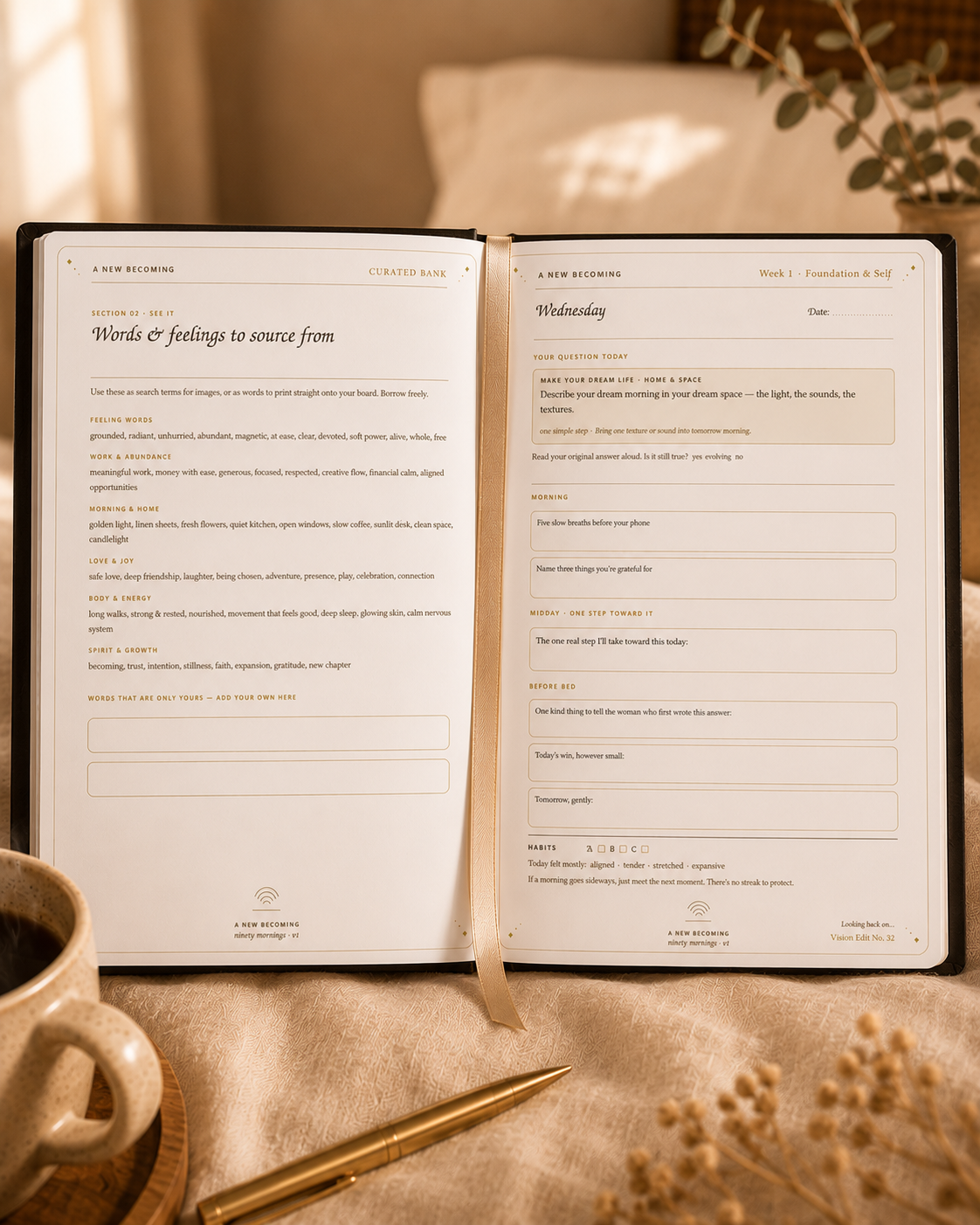
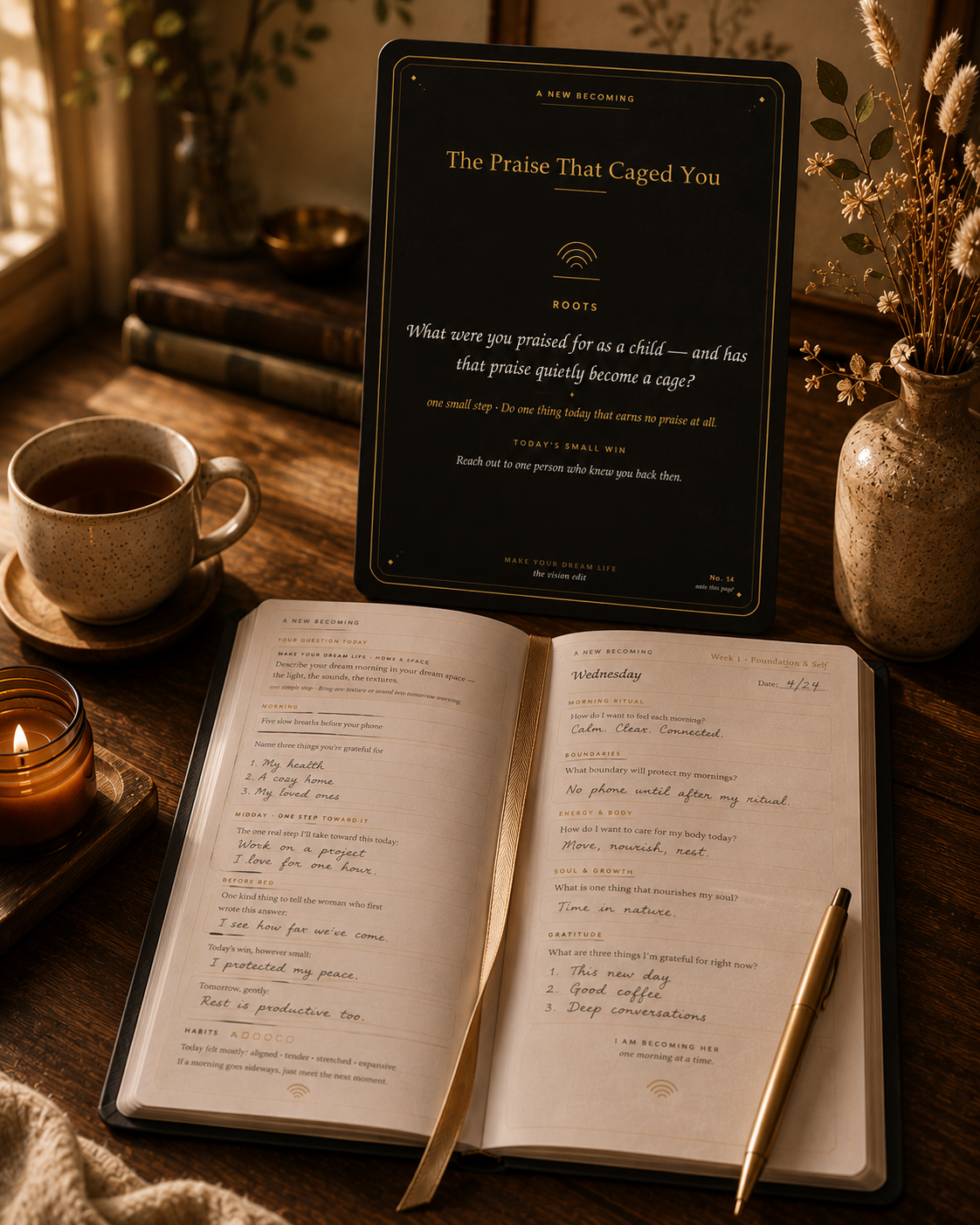
Book Two of Two · An A New Becoming Guided Writing Tool
Now we walk it — a practice that reads your own answers back to you, one honest page whenever you come back.
“Stop restarting from scratch. Build a practice you actually keep returning to.”
What's Inside
Recently refreshed: all writing pages are now on clean white backgrounds — easier to print, easier on the eyes, beautiful to write on.
Book Two is where the wanting gets walked. It reads from the answers written in The Vision Edit — start there first.
“You kept coming back — and that was the whole secret.”
$34
Instant digital downloadPrint or write digitallyNo subscription
An A New Becoming Collection · All Three
The complete practice — get clear, live it daily, and rewrite what runs underneath.
“The complete path from a first honest answer to an ordinary Tuesday that feels like yours.”
What's Inside
The books can be bought one at a time, in any order that suits the season. This is simply all of it, together.
“It's a roadmap, not a promise. But it's a path that can actually be walked.”
$60$75
You save $15Instant PDF downloadsNo app, no login, no expirySimple refund policy
The Deeper Edits
The three books above map a whole life. These go one layer down — into the single thing that’s actually been heavy. Same ninety questions, same unhurried pace, aimed at one season instead of all of them.
One Root · Ninety Questions · The Same Gentle Pace
Deck No. 01
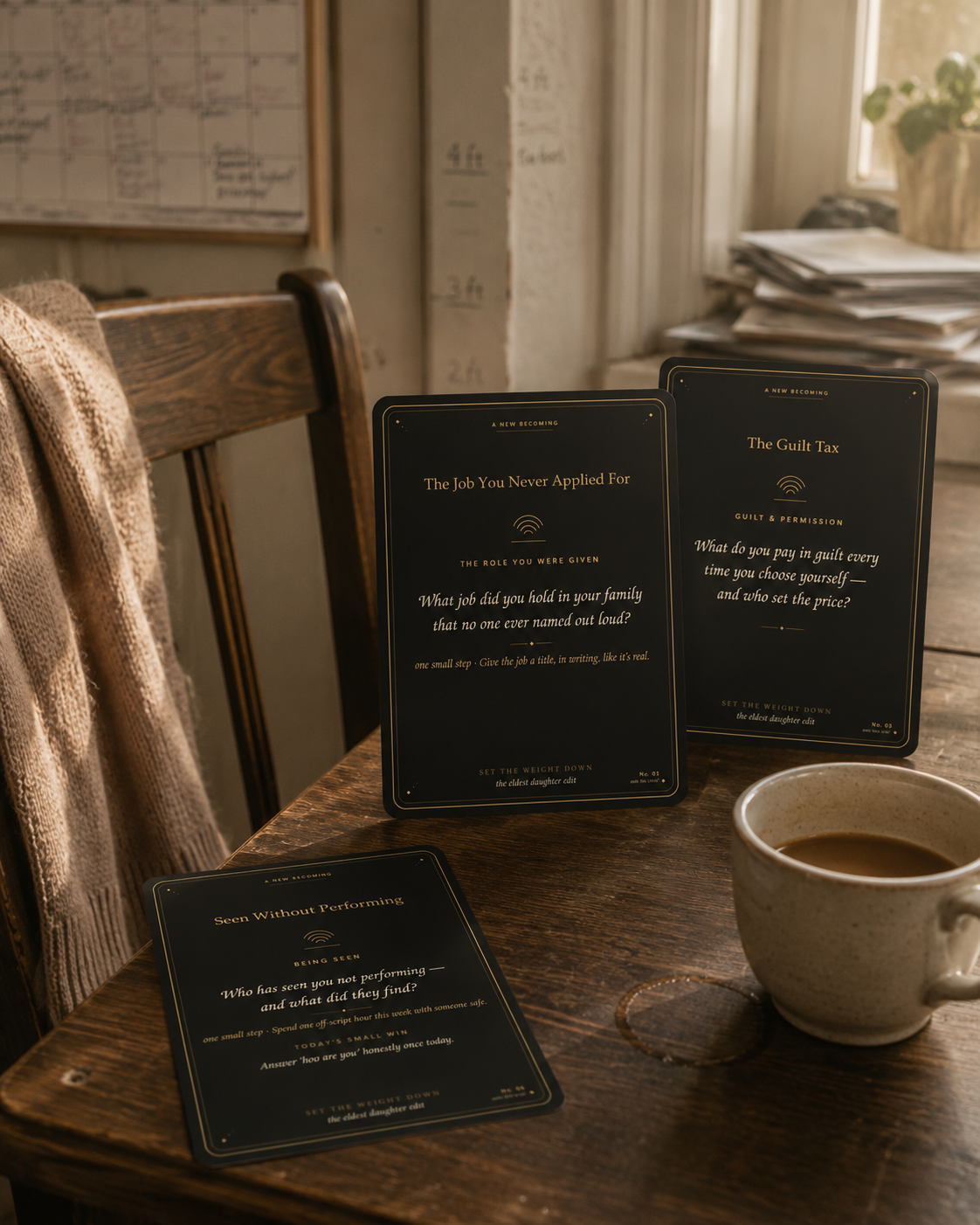
“What job did you hold in your family that no one ever named out loud?”
Ninety deep-rooted questions for the daughter who became the family's manager, translator, and third parent. Name the role you were given, the load nobody sees, and the life waiting underneath it.
What's inside
Deck No. 02
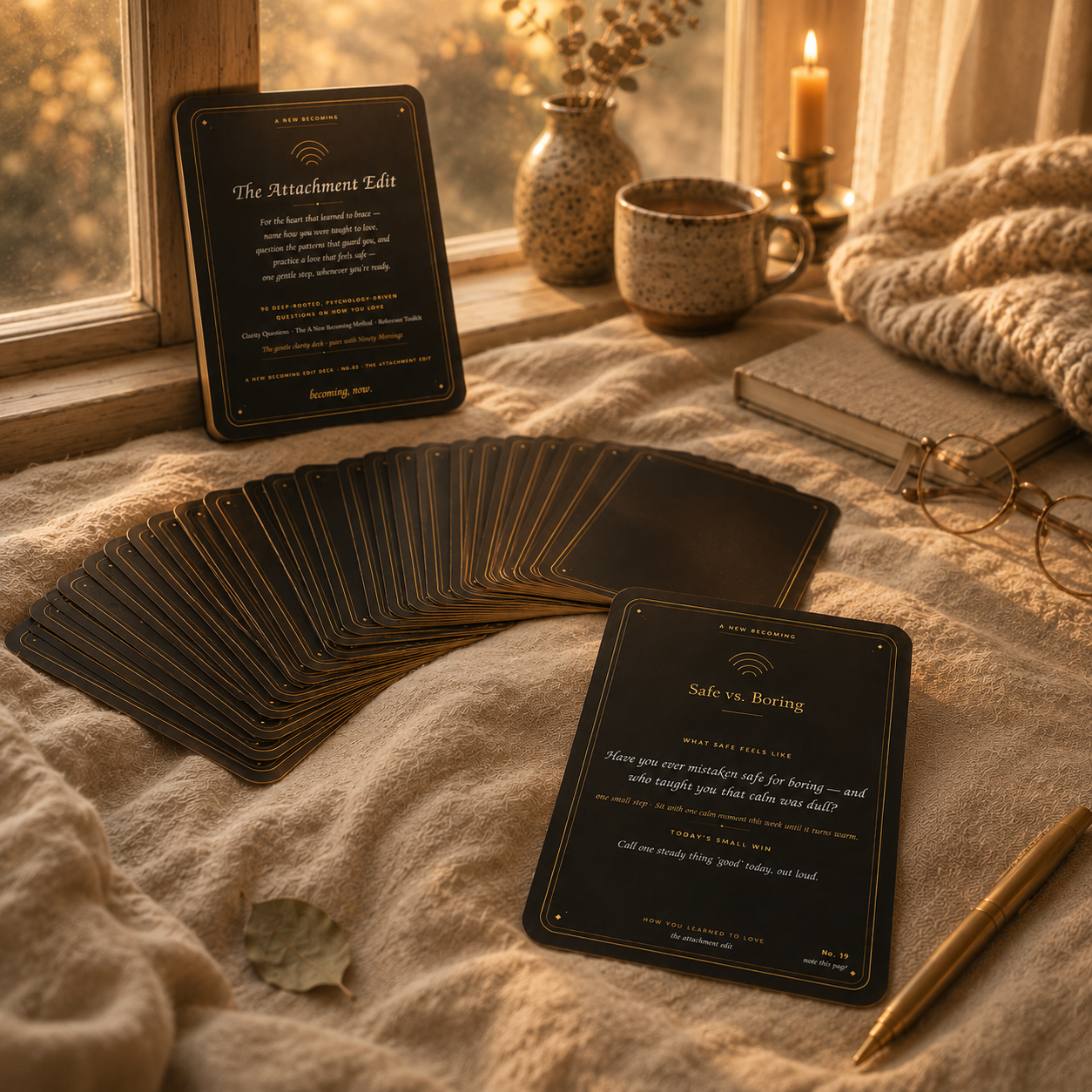
“What do you do the moment you sense someone pulling away — and who taught you to brace?”
Ninety deep-rooted questions on how you learned to love — the bracing, the scanning, the careful distance. Not a label, not a diagnosis. Just an honest look at the patterns, and a gentler way to practice.
What's inside
Deck No. 03
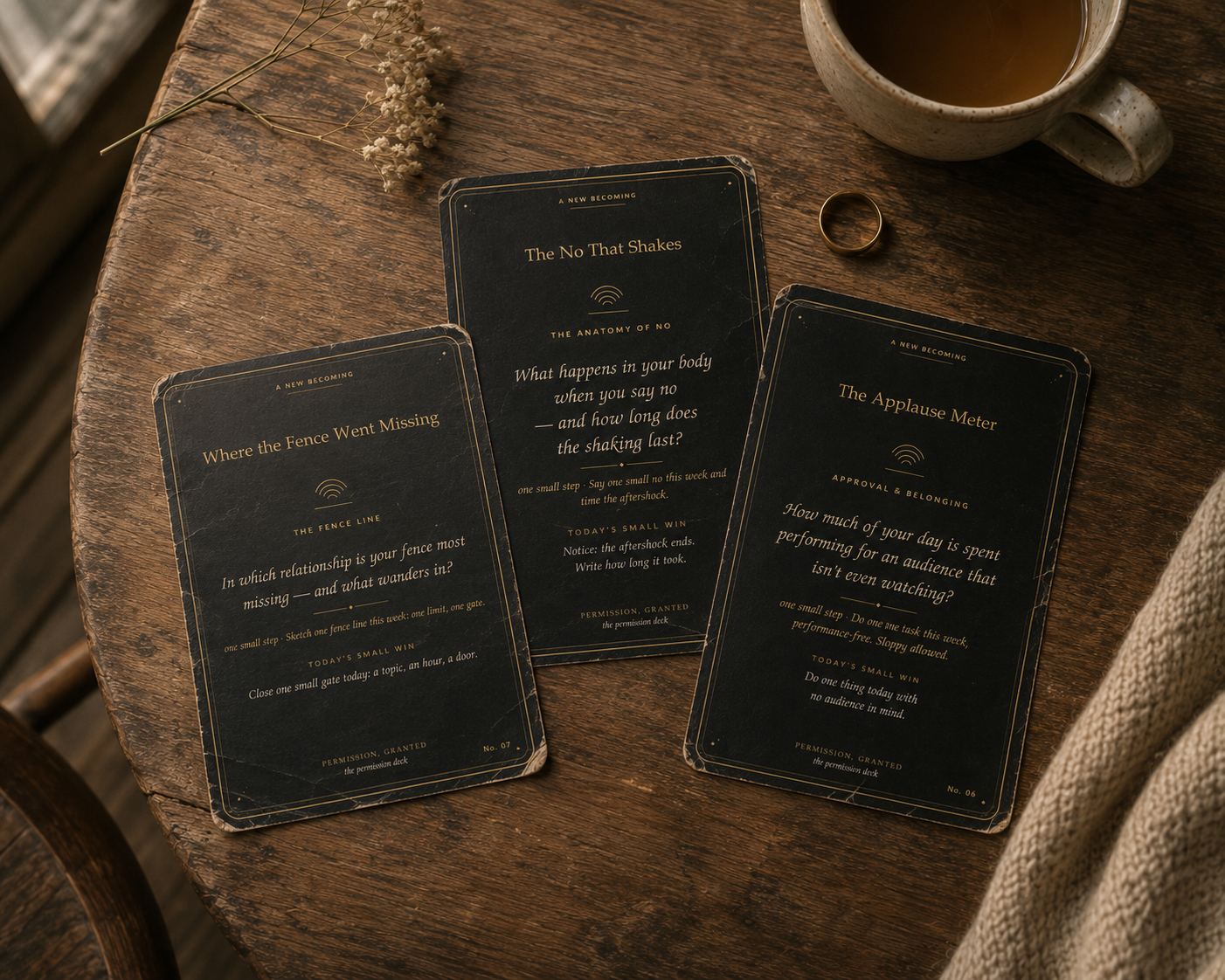
“What do you say yes to before you've even checked whether you want it?”
Ninety deep-rooted questions on people-pleasing and boundaries. Find where no got dangerous, what keeping the peace has cost, and how to say the true thing plainly — without becoming someone harder.
What's inside
“Start with whichever one you recognized yourself in.”
A gentle companion for the work — not a replacement for therapy or professional care.
Notes from the becoming
"The Vision Edit gave me language for things I'd been circling for a year. By question twelve I finally knew what I actually wanted — not what I was supposed to want."
"I've started plenty of things and finished none. The page is small enough that I actually open it. Weeks in and I haven't 'restarted' once — I've just returned."
"It reads my own answers back to me. I forget what I wrote in Book One and then Book Two hands it back on a Tuesday morning like, 'remember?' It's disarming in the best way."
"After my divorce I didn't need another mindset book. I needed a page waiting for me before the kids woke up. That's exactly what this is."
"The Sunday check-in is the quietest, most honest hour of my week now. I stopped white-knuckling my goals and started noticing them."
"Beautiful and thoughtful. Fair warning — the companion really is just one small step a day, so if you're looking for a rigid, color-coded system this isn't it. For me the simplicity is why it finally stuck."
"I gifted the bundle to my sister after her hard year. She texted me a week in: 'this is the first thing that hasn't made me feel behind.' Worth every dollar."
"It doesn't shout. It doesn't shame you on the days it falls apart — it literally tells you how to pick it back up whenever you come back. That single page changed my relationship with consistency."
"The Vision Edit gave me language for things I'd been circling for a year. By question twelve I finally knew what I actually wanted — not what I was supposed to want."
"I've started plenty of things and finished none. The page is small enough that I actually open it. Weeks in and I haven't 'restarted' once — I've just returned."
"It reads my own answers back to me. I forget what I wrote in Book One and then Book Two hands it back on a Tuesday morning like, 'remember?' It's disarming in the best way."
"After my divorce I didn't need another mindset book. I needed a page waiting for me before the kids woke up. That's exactly what this is."
"The Sunday check-in is the quietest, most honest hour of my week now. I stopped white-knuckling my goals and started noticing them."
"Beautiful and thoughtful. Fair warning — the companion really is just one small step a day, so if you're looking for a rigid, color-coded system this isn't it. For me the simplicity is why it finally stuck."
"I gifted the bundle to my sister after her hard year. She texted me a week in: 'this is the first thing that hasn't made me feel behind.' Worth every dollar."
"It doesn't shout. It doesn't shame you on the days it falls apart — it literally tells you how to pick it back up whenever you come back. That single page changed my relationship with consistency."
The Thinking Behind It
Structured, reflective writing has been studied by psychologists since the mid-1980s — expressive writing, positive emotional writing, benefit-finding, goal narratives. Different labs, different decades, one recurring idea: that putting language to an experience changes a person's relationship to it.
A New Becoming didn't invent that. These books are simply built on it — closely, and on purpose. The prompts are written in the present tense because that's how the research paradigms are structured. The answers get numbered because a practice you return to needs somewhere to return to. The pages are designed to be re-entered, not completed, because the returning is where the practice actually lives.
We make no claims about what any of this will do for anyone. We just built the books the way the reading suggested they should be built — and then made them survivable on the days they get skipped.
A roadmap, not a promise. But an honest one.
Research on reflective and expressive writing is an active field with mixed and context-dependent findings. Nothing here is a health claim, a treatment, or a substitute for professional support.
A quiet look at what's inside — and what isn't — so it's an easy decision either way.
What They're Built For
Seasons that ask for a beginning, not a bounce-back.
Days where motivation is thin and a page has to do the carrying.
Putting words to what a life actually wants — before making any plans.
A practice that survives the weeks it gets skipped.
Small, doable pages instead of one large leap.
Working things out slowly, on paper, in private.
What They Aren't
Not therapy, and not a stand-in for professional support.
Not a promise of any particular outcome.
Not a course, an app, or another thing to log into.
Not a streak to keep perfectly — returning matters more.
Not a quick fix; a practice with room for whole seasons.
Not for anyone who'd rather be handed answers than write their own.
If that sounds like the right kind of work, start with Book One. If not, that's genuinely all right — the honest no saves the season.
These are clarity and practice tools — not therapy, and not a substitute for professional support. In a genuinely hard season, please lean on people and professionals who can help, too. The books will still be here.